October 1, 2026
Lipomas Are Benign Masses Brought On By Overgrowth Of Fat Cells
By @angelocjrp568
❦
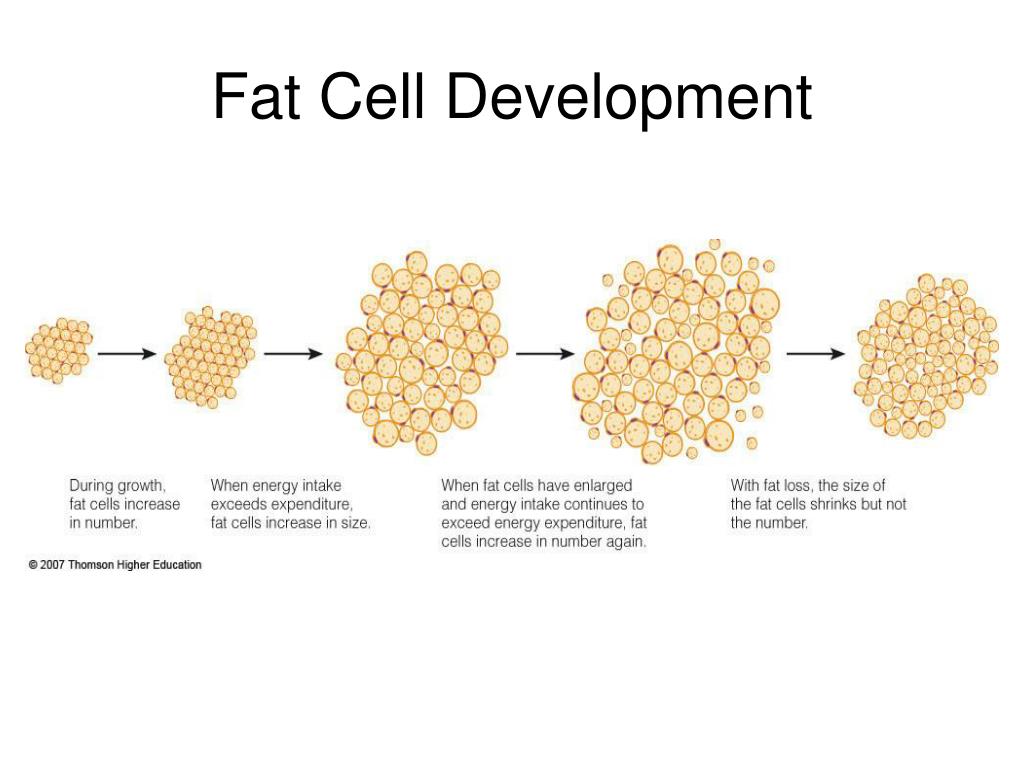
Study Sheds Light On How Fat Cells Securely Enlarge To Keep Power When you lack cells to keep lipids, the fat cells themselves become enlarged. In Scherer's research study, researchers controlled a protein called MitoNEET in the external membrane layer of the precursor cells' mitochondria, organelles referred to as the cells' nuclear power plant. The resulting mitochondrial dysfunction and decrease in cell metabolic process triggered precursor cells to lose the capability to end up being brand-new fat cells and raised swelling. Paradoxically, that is where computer mice in his study were least able to produce new fat cells, although that stem-cell-like progenitor cells primed to come to be fat cells were present there as well, he states. As fat cells enlarge, they launch hormones and various other chemicals that trigger swelling to spread out throughout your body.
- Development hormone, along with NA, adrenaline, and cortisol rise with exercise intensity, while insulin degrees lower.
- The majority of our fat cells are formed in utero throughout the fetal phases of growth.
- And if you're still on the fence, get a summary of your choices and discover more about the treatments we offer in our on the internet bariatric workshop.
- As soon as fat cells can no more safely store excess fat, the surplus does not go away.
- The searching for that human resistin comes from not in adipocytes but in mononuclear lymphocytes elevated the opportunity that the hormone might have distinct duties in the two varieties.
- In these computer mice, the endogenous resistin genetics (generally expressed in adipocytes) was removed, and the macrophage-expressed human resistin genetics was placed (180 ).
Excessive Weight And Inflammation: What's The Link?
Further, insulin level of sensitivity and EAT thickness are inversely correlated, whereas fasting sugar and EAT dimension are positively correlated, with enlarged EAT depots usually discovered in people with type 2 diabetic issues (376,386,387). These information recommend that EAT features as an unique fat depot with vital physiological and pathological functions. An underappreciated impact on AT physiology is the adipose extracellular matrix (ECM). The dynamics and structure of the ECM are vital for appropriate adipocyte growth and function (317 ). During adipogenesis, there is enhanced synthesis of laminar ECM components and upkeep of peri-adipocyte fibrillar collagens that eventually enables the adipocyte to embed itself Find out more in the basal lamina (317 ). In the development phase of adipogenesis, adipocytes require ECM-mediated traction forces to appropriately accumulate lipids and increase in dimension.How to get rid of enlarged fat cells?
Rodent Versus Human Adipose Depots
Although GRs and MRs are revealed in AT and thought to moderate cortisol's activities on AT, the levels of GR are numerous hundred-fold higher than MR in both human preadipocytes and adipocytes (280 ). Loss of GR, however not MR, obstructs the adipogenic abilities of cortisol in human preadipocytes (280 ). Nevertheless, MR expression is higher in omental than in subcutaneous AT, so there can possibly be depot distinctions in the relative value of MR and GR in cortisol-induced adipogenesis (280 ). Several differences exist in between rodent and human subcutaneous (SubQ) and natural AT depots. In the number SubQ depots are tinted as beige, while natural depots are white, and BAT or BAT-like depots are brownish. The partnership in between adipocyte development and thyroid hormones has actually been acknowledged given that 1888 when a report on myxedema Click for more info recommended that obesity was a demand for a medical diagnosis of hypothyroidism (293 ). The most biologically active kind of thyroid hormone, T3, can generate brownish adipocyte distinction (294 ). Hyperthyroidism in rats induces adipocyte hyperplasia, whereas hypothyroidism hinders AT growth (295 ). In general, researches on the involvement of thyroid hormonal agents in AT growth are debatable. The final step in TAG synthesis, re-esterification of flowing free fatty acids, mediated by diacylglycerol acyltransferase (DGAT) (37,38). The 2nd process is by afresh lipogenesis (DNL) within the adipocytes themselves. Lipogenesis consists of both de novo synthesis of fatty acids from acetyl-coenzyme A (acetyl-CoA) and the esterification of these fatty acids to a glycerol foundation generating TAGs (Figure 4). Adhering to a dish, especially one high in carbohydrates, excess glucose oxidation yields raised degrees of acetyl-CoA that come to be substratum to produce fatty acids. This happens through actions of the DNL enzymes acetyl-CoA carboxylase 1 (ACC1) and fat synthase (FAS) to convert acetyl-CoA to palmitate, which can after that be extended and desaturated to create other fatty acid varieties (39 ). The earliest identified feature of adipocytes was the storage of energy in the type of triacylglycerols (TAGs). 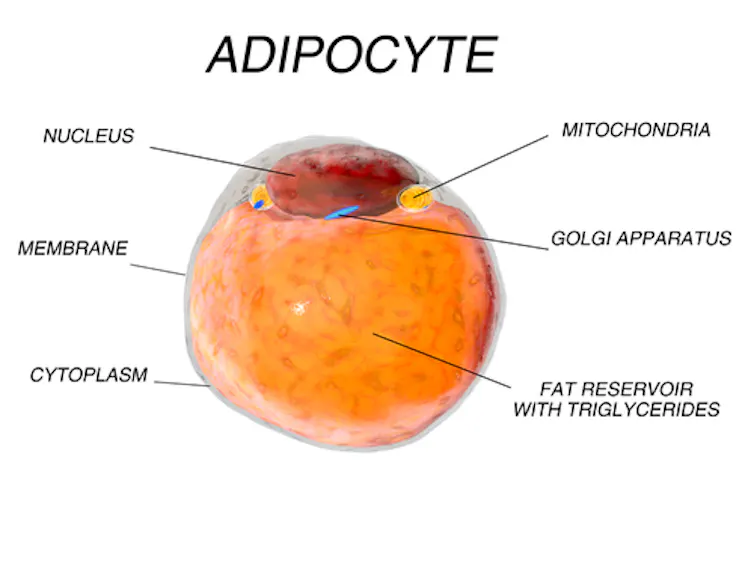
❧